
Hiler Industries has a long history with the shell mold casting process. We were among the first foundries in the world to adopt this technique, and it still forms the backbone of our services to this day. But to fully understand what makes this process special, it’s important to know how it works and how it differs from other casting methods. There are many reasons why our customers choose to take advantage of our services time and again, and the shell molding process is one of the most prominent of these.
Guide to the Shell Molding Process
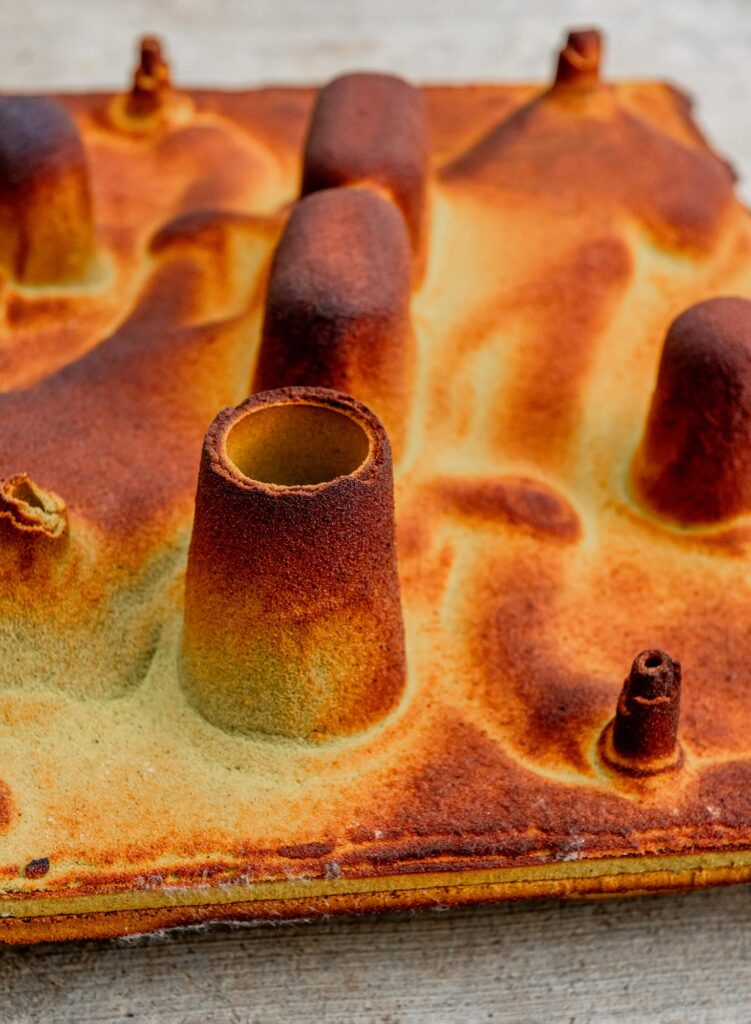
What is the Shell Molding Process?
Practically all forms of casting utilize the same principles — metal is melted down into molten form and poured into a mold to create a desired shape after it cools. For many years, one of the preferred methods was sand casting. This involved using a mix of damp or “green” sand and clay which is formed around a shape to be duplicated. When the shape is removed, what’s left is a mold made of tightly compacted green sand and clay. The metal is poured into this mold, which is broken away after the metal cools.
The shell molding process’ steps are virtually identical except for one key difference. Rather than using the mix of green sand and clay, shell molding uses a much finer sand coated with resin. The shape to be duplicated is heated and then covered with the resin-coated sand. Contact with the hot shape causes the resin to fuse and bond multiple layers of sand together to form the mold.
What Makes Shell Molding Different?
Unlike traditional sand casting, the shell molding process typically uses finer sand grains. That’s because the resin melts and bonds each grain together. The result is a mold that can be much thinner than clay-based sand molds, which means the overall weight of the casting is kept to a minimum. Another crucial advantage of the shell molding technique is that because the sand used is so fine, the resulting mold captures much more of the detail of the shape being duplicated. This is important not only because it ensures a higher degree of accuracy in the final casting, but also because it reduces the need for machining on the part further down the production line.
Common Applications of Shell Mold Casting
Numerous industries choose the shell mold casting process when they need parts cast to much tighter tolerances than other casting methods. Some of the most prominent examples of manufacturers who depend on this technique include:
- Mining and Energy — Parts made for mining and drilling equipment must be made of extremely hard metals, which means post-casting machining isn’t always an option. The sand molding process enables these parts to come out of the mold almost exactly as designed.
- Automotive — Automakers often use this method to create engine blocks and transmission housings along with other components designed for durability and precision.
- Industrial Equipment — Shell mold casting is the ideal method for producing complex shapes with strict tolerances such as gears, valves and pump housings.
Turn to Hiler Industries for Shell Mold Casting Expertise
With its high level of accuracy, reduced overall weight and versatility, it’s not a surprise that shell molding is the preferred technique for a wide range of metal casting applications. Hiler Industries has been at the forefront of this technology practically from day one, meaning we have the skill and expertise needed to ensure the highest-quality results. To learn more about what makes us the leaders in the industry or start the conversation about your project, reach out and talk to one of our representatives today.
Discover Quality Shell Casting and Molding Solutions
Contact us today to get started.