
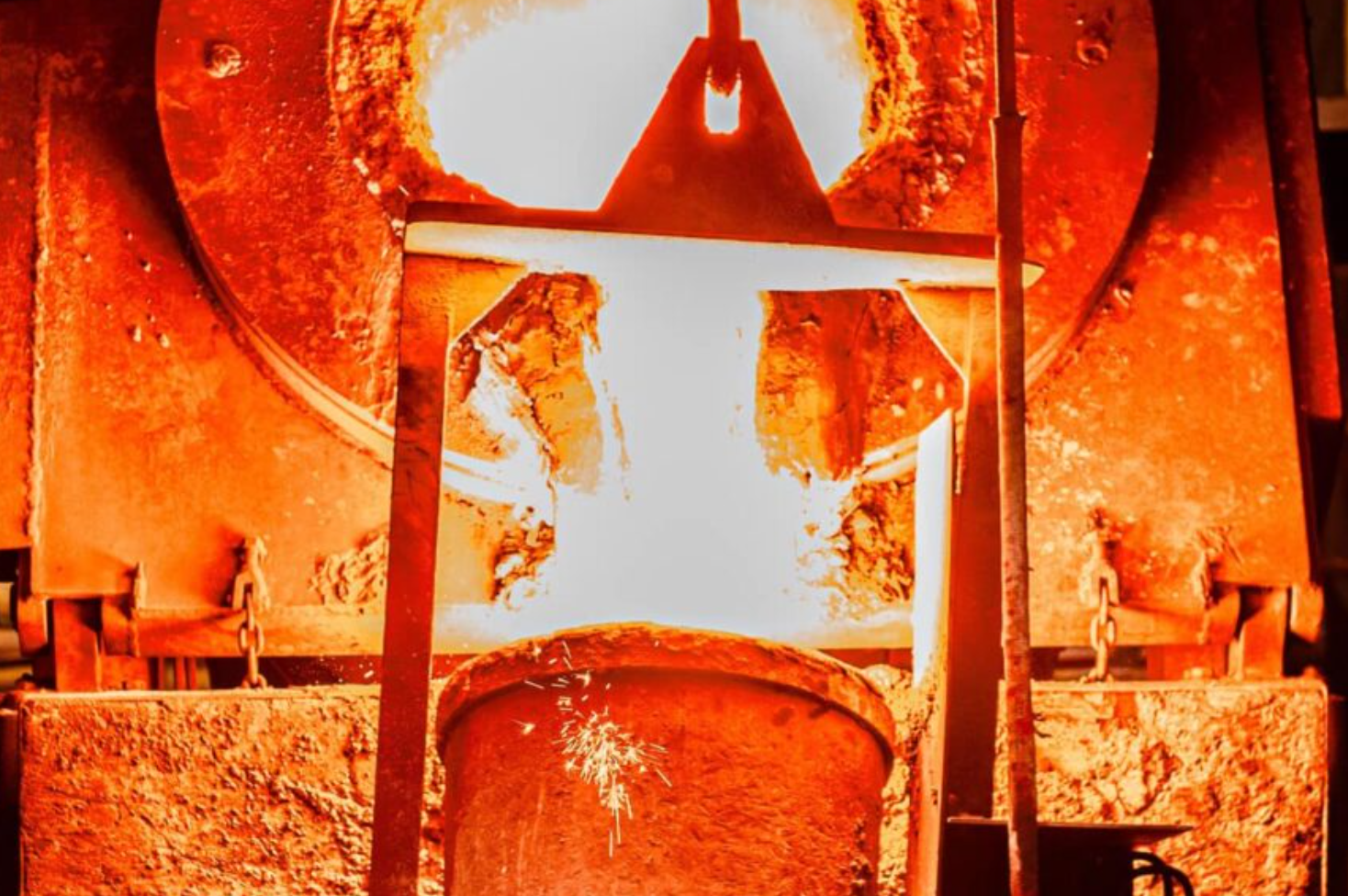
Grey cast iron has been a dependable material for industrial components for generations. Its combination of excellent machinability, vibration damping, compressive strength, thermal performance, and cost-effective production makes it suitable for everything from agricultural equipment and commercial vehicles to construction machinery and municipal infrastructure.
In fact, grey iron is one of the most widely used materials in the casting industry. Its graphite-flake microstructure gives the material several characteristics that are especially valuable when components must be cast into complex shapes, machined efficiently, and perform reliably in demanding environments.
At Hiler Industries, grey iron castings are produced exclusively through the shell molding process. Since 1946, Hiler Industries has developed extensive shell casting expertise, combining two modern foundries with in-house pattern making, metallurgical testing, machining, finishing, and other value-added capabilities.
Understanding the many applications, and uses of grey cast iron, its advantages and its limitations can help engineers and manufacturers determine when this versatile material is the right choice for an iron casting application.
What Is Grey Cast Iron?
Grey cast iron, also commonly called grey iron, grey cast iron, or simply grey iron casting, is a ferrous material containing carbon that forms graphite flakes throughout its microstructure. The material gets its name from the grey appearance of a fractured surface, which results in part from these graphite flakes.
More importantly, graphite morphology has a significant influence on how grey iron performs. The flakes contribute to excellent machinability, good wear resistance, thermal conductivity, and superior vibration absorption.
Typical grey cast iron contains approximately 2.5% to 4% carbon and 1% to 3% silicon, although the precise chemistry and resulting mechanical properties depend on the required grade and application. Grey iron should not be confused with ductile iron. The primary distinction is the shape of the graphite.
In grey iron, graphite occurs as flakes. In ductile iron, the addition of a small amount of magnesium encourages graphite to form spherical nodules. This change in microstructure gives ductile iron greater strength, ductility, and impact resistance. The result is two useful cast iron materials designed for different performance requirements.
Why Choose Grey Iron for Iron Casting?
One reason for the widespread uses of grey cast iron is the balance of performance and manufacturing efficiency it provides.
Excellent Vibration Damping
The graphite flakes in grey cast iron help absorb and dissipate vibrational energy. This makes the material particularly useful for machinery components where minimizing vibration, noise, or chatter is important. Machine bases, equipment housings, and similar components can benefit substantially from this damping capacity.
Exceptional Machinability
Graphite also contributes to grey iron’s machinability. The flakes help create short, manageable chips during machining while providing a lubricating effect at the cutting interface. For manufacturers, excellent machinability can mean faster machining cycles, reduced tooling demands, and more efficient production of finished components.
Good Thermal Performance
Grey cast iron combines good thermal conductivity with the ability to retain its shape through thermal and mechanical cycling. These characteristics help explain its long history in brake components and other applications where heat must be absorbed and distributed.
Cost-Effective Castability
Grey iron flows well when molten and can fill relatively complex mold geometries. Combined with its comparatively low melting temperature and machinability, this makes grey cast iron a cost-effective choice for many medium- and high-volume components. When shell molding is used, manufacturers can gain additional benefits from repeatability, surface finish, and near-net-shape production.
Typical Uses of Grey Cast Iron in Industry
- Agricultural equipment may use grey iron for gearbox housings, covers, brackets, and other machinery components requiring dimensional stability, compressive strength, and machinability.
- Construction and earthmoving equipment can incorporate grey iron components where vibration damping, wear performance, and the ability to create substantial cast sections are valuable.
- Truck trailers and commercial vehicles use iron casting for a variety of housings, brackets, and supporting components.
- Railway applications can take advantage of the durability and casting flexibility of grey iron.
- Municipal infrastructure has historically relied on cast iron for components such as covers, housings, and piping-related products.
The thermal conductivity of grey iron castings, along with wear characteristics and ability to absorb vibration, make it well suited to components that repeatedly absorb and dissipate heat. Additional applications range from pump and valve bodies to machine-tool bases, engine components, and counterweights.
Grey Iron Castings Via Shell Molding
Choosing the material is only part of the casting decision. The molding process also has a major influence on dimensional consistency, surface quality, and downstream manufacturing requirements.
Shell mold casting uses resin-coated sand that is thermally bonded around a heated metal pattern. The resulting thin, hardened shell forms the mold into which molten metal is poured. Compared with conventional green-sand processes, shell molding can provide excellent surface finishes, tighter tolerances, and more consistent results. These characteristics are especially beneficial when producing repeatable grey iron castings in medium- to high-volume applications.
Shell molding can also help reduce machining stock by producing components closer to their final required geometry. However, achievable tolerances should always be evaluated according to casting size, geometry, material, tooling, and critical dimensions rather than relying on a universal tolerance.
Hiler Industries supports this process with an in-house pattern shop. Computer Numerical Control (CNC) machined patterns help provide close, consistent casting tolerances, while solidification capabilities assist with metal flow and gating development. The pattern shop also uses 3D scanning or a CMM for dimensional verification during sampling. Tooling is CNC-produced to customer specifications and monitored to support tooling life and consistency throughout production.
Grey Cast Iron vs. Ductile Iron
Grey and ductile iron share many advantages of cast iron manufacturing, but they should not be treated as interchangeable. Grey iron’s flake graphite provides superior damping and machinability but also creates stress concentrations within the material. As a result, grey iron generally has lower tensile, impact, and fatigue performance than ductile iron.
Ductile iron’s spherical graphite structure significantly improves toughness and elongation. Hiler Industries notes that ductile iron can provide a minimum tensile strength of 60,000 psi in certain grades while also offering improved impact resistance compared with grey iron.
Choose grey cast iron when damping, machinability, dimensional stability, and cost efficiency are primary requirements. Consider ductile iron when the component must tolerate substantial tensile loads, shock, repeated fatigue loading, or deformation without brittle fracture.
Metallurgy, Microstructure, and Heat Treatment
The performance of any iron casting starts with metallurgy. In grey cast iron, graphite flake size, shape, and distribution influence strength, machinability, damping, and wear characteristics. The surrounding metallic matrix, commonly ferritic, pearlitic, or a combination, further affects hardness and mechanical performance.
Heat treatment may be used when a particular application requires changes in hardness, dimensional stability, or machinability. Stress relieving, annealing, and other thermal processes can be considered depending on the grade and service conditions.
For this reason, casting specifications should communicate more than nominal dimensions. Material grade, chemistry, hardness, microstructure, and required mechanical properties should be clearly established with the foundry.
Hiler Industries supports material control through a full metallurgical laboratory that uses spectrographic analysis and material-testing technology to verify customer requirements and metallurgical characteristics.
Design Guidelines for Grey Iron Castings
Good casting design begins long before molten iron reaches the mold.
Designers should avoid abrupt changes in section thickness whenever possible. Gradual transitions and generous fillet radii help improve metal flow and reduce localized stress concentrations. There is no single minimum fillet radius or ideal wall thickness for every grey iron casting. These values should be developed based on overall part size, geometry, loading, casting process, and alloy. Uniform wall sections are generally preferable, while unnecessarily heavy sections should be avoided.
Gating and riser placement are equally important.
Gates should promote controlled filling of the mold, while the overall system should account for solidification behavior and minimize defects. Working with the foundry during the design stage can identify opportunities to improve yield and casting quality.
Machining allowances should also be deliberate.
Shell molding’s ability to produce near-net shapes may allow designers to reduce excess machine stock compared with less precise processes. Hiler Industries specifically emphasizes tooling design focused on improved yield, reduced machine stock, and near-net-shape castings.
Quality, Testing, and Standards for Grey Cast Iron
Reliable grey iron production requires measurable acceptance criteria.
Depending on the application, common quality requirements can include:
- Tensile testing to verify mechanical properties
- Hardness testing to confirm the specified range
- Microstructure analysis to evaluate graphite and matrix characteristics
- Dimensional inspection for critical features
- Chemical analysis to confirm material composition
Grey iron grades are commonly identified by minimum tensile strength. For example, Class 30 grey iron indicates a 30,000-psi minimum tensile strength. Hiler Industries pours multiple grey iron grades under SAE J431 and lists grey cast iron capabilities corresponding to ASTM A48/SAE J431 requirements.
Incoming casting specifications should define the applicable material standard, grade, dimensional requirements, hardness range, critical characteristics, and inspection expectations. Quality systems matter as well. Hiler Industries is ISO 9001:2015 certified, supporting a structured approach to manufacturing quality and continual improvement.
Machining, Finishing, and Coatings for Grey Iron Castings
Although grey iron is highly machinable, effective CNC machining still requires the correct tooling, speeds, feeds, and work holding strategy. Machining plans should account for the material’s graphite content and hardness, while fixtures should securely support the casting without introducing unnecessary stresses. Consistent casting geometry is particularly valuable because it helps maintain predictable machining stock from part to part.
Heat treatment can change hardness and microstructure, so machining parameters may need adjustment when heat-treated castings are specified. Depending on the operating environment, finished grey iron components may also receive protective coatings or surface treatments. Options can include paint, powder coating, or application-specific protective finishes to reduce surface oxidation and improve service life.
Hiler Industries provides value-added capabilities beyond casting, including heat treating, surface coatings, machining, and finishing.
Applications That Benefit Most from Grey Iron
Some components are particularly well suited to grey cast iron. In each case, the strongest results come from matching material grade, casting process, and component design to the actual service requirements.
- Housings and machine bases benefit from excellent vibration damping, dimensional stability, and compressive strength. Grey iron can help absorb vibration rather than transferring it throughout a machine assembly.
- Pump and valve bodies benefit from castability and machinability. Complex passages, mounting features, and sealing surfaces can be incorporated into the casting and subsequently machined where precision is required.
- Agricultural gearbox housings combine many of grey iron’s advantages in one application. These components may require complex geometry, rigid support, vibration damping, machinable bearing locations, and reliable performance in demanding environments.
Choosing a Foundry Partner
Selecting the right grey iron is important. Selecting a foundry capable of consistently producing it to specification is just as important.
Hiler Industries has manufactured grey, ductile, alloyed, and specialty iron castings since 1946. Today, our Indiana operations include two foundries, an in-house pattern shop, a metallurgical laboratory, machining capabilities, centralized finishing, and consolidated shipping.
Every casting is produced using the shell molding process, which enables Hiler Industries to deliver precision castings with excellent surface finishes, consistent dimensions, and near-net shapes. We produce millions of shell-molded castings each year and serve industries including agriculture, construction, railway, municipal, commercial vehicles, and truck trailers.
These U.S.-based capabilities also allow customers to work with a supplier that can support a casting throughout much of its lifecycle, from pattern, and tooling development through metallurgy, heat treatment, CNC machining, finishing, and shipping.
For manufacturers evaluating the applications and uses of grey cast iron, the material continues to provide an effective balance of performance, manufacturability, and value. And when the application calls for repeatable, high-quality grey iron castings, Hiler Industries offers the shell molding expertise and integrated capabilities needed to turn a casting design into a production-ready component.
Looking for a partner for your next grey iron casting project? Contact Hiler Industries to discuss your application, specifications, and shell molding requirements. We are here to help.