
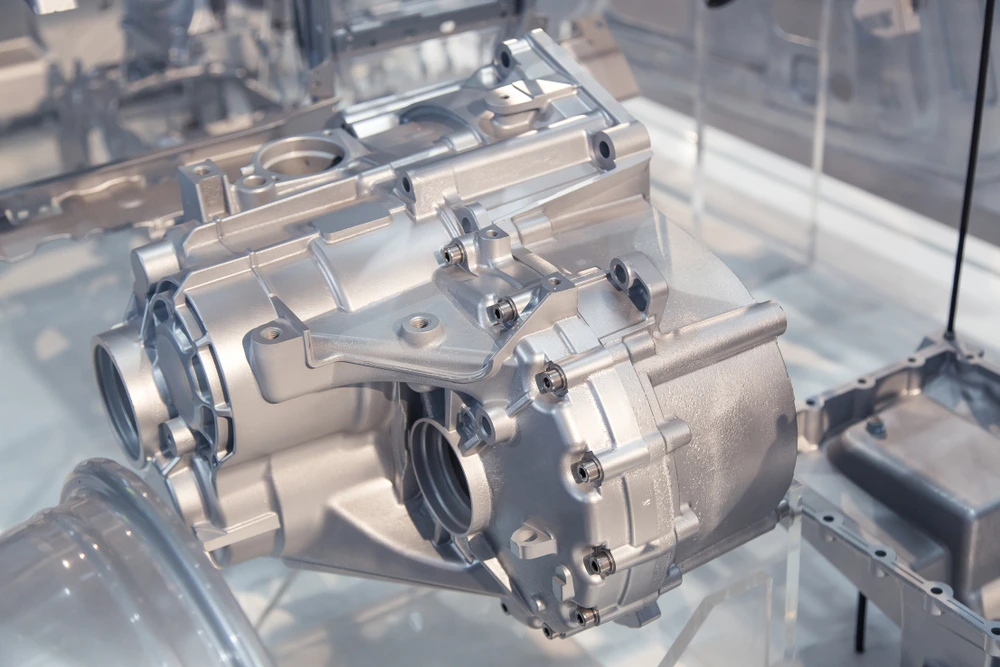
People have used metal casting for centuries because the process enables parts to come out of a mold as a single solid piece of metal. This typically means the finished metal part will be stronger and more reliable than one that was created by welding individual pieces together. That level of durability and strength is no less important today as it was thousands of years ago, which is why casting is the preferred method of creating parts and components used in demanding sectors such as aerospace, military, and automotive manufacturing.
But even though casting creates stronger parts in theory, simply using the process is not enough to ensure a reliable component. An iron casting is only as strong as the design it is based on, and there are many ways in which a part’s design can cause it to fail even when using the strongest possible iron alloys. For example, metal casting designs that feature abrupt changes in wall thickness, especially sharp corners, or not enough draft to allow easy removal from the mold all can lead to parts that don’t meet the required specifications. Designs also can have a significant impact on the amount of machining and finishing required before the casting can be used, which can drive up costs and create inefficiencies.
Designers and engineers must use caution when designing a part intended for iron casting. They should take all the strengths and limitations of iron casting methods into account so they achieve the best possible results from the process. This means following several commonly recognized best practices that prevent many of the issues that careless designs can cause. Here are some best practices for iron casting design that make components stronger, more durable, and easier to handle in manufacturing processes.
1. Make Sure Walls are Uniform
The walls of an iron casting should be kept as uniform as possible, with no sudden changes in thickness. When designs feature inconsistent wall thicknesses, it can lead to significant problems during casting. Because thicker walls cool down slower than thinner walls, the entire component may cool down unevenly, which can impact the structural integrity of the finished piece. It may shrink in places, cause stress on certain areas, or result in areas of higher porosity. Any of these conditions can lead to parts wearing down prematurely or failing suddenly, making uniform walls a high priority when designing iron castings.
2. Avoid Complex Core Use
Parts that require hollowed-out sections or undercuts call for the use of cores in their design. These cores help ensure the part meets the desired shape and functionality, but they also add to the complexity of designs. Unnecessary complexity also brings added risk to the casting process, so it’s important for designers and engineers to do what they can to minimize core usage to the bare minimum. For example, any cored sections that are not absolutely necessary for the function or form of the part should be marked for removal or redesign. In many cases, redesigning the geometry of open sections can reduce the reliance on cores and keep the design as simple as possible. Careful planning in the design stage can result in stronger castings and prevent the risk of core shifting during the casting process and make production smoother and more efficient.
3. Pay Attention to Draft Angles
One element of iron casting design that can go overlooked is the use of proper draft angles. These are the tapered edges along vertical surfaces that serve to make the pattern easier to remove from the mold after casting. This is especially important in large-scale production because it prevents damage to the mold that can slow down the process and lead to defects in later castings. In general, it is recommended that designers incorporate a 3-degree draft angle to ensure the best possible results in the finished casting. This tapering must be consistently applied throughout the casting design, but textured or rough surfaces generally should include higher draft angles to make sure these areas don’t cause damage to the mold or result in surface defects.
4. Understand the Limits of Ductile Iron
Some designs call for thinner walls than others, and it’s important for designers and engineers to be aware of exactly how thin walls can be when using ductile iron. Making the walls of a component too thin can result in the molten iron not filling the mold all the way. This means the resulting piece may be too weak structurally to deliver the ideal performance or the entire piece may need to be scrapped. This is why it’s recommended for walls to be no thinner than 0.3”, as this will ensure the iron flows into the mold properly and ensure the overall structural integrity of the finished component.
5. Make Sure Fillet Radii are Sufficient
Using a 90-degree angle when two surfaces meet on a mold design might seem like it makes sense, but this can lead to serious structural issues in the finished component. This is because sharp corners are vulnerable to extreme stresses, which can result in cracking. It’s also worth considering that sharp angles may result in molten metal flow being disrupted as it enters the mold, which can lead to uneven filling and empty spots. Instead of designing components with sharp angles, it’s recommended to use fillet radii on these intersecting surfaces. A fillet radius is a rounded curve inside the corner rather than sharp angle. This ensures that force is distributed more equally at the intersection, not only making the part stronger but also ensuring ductile iron flows properly into the mold.
6. Consider Machining Requirements ASAP
Many castings require additional machining after they are removed from the mold to finalize their shapes or finishes. For maximum production efficiency and adherence to tolerances, it’s always a good idea to consider the machining requirements during the design process. In most cases, this means preventing the creation of difficult-to-access interior spaces that would add to the challenge and cost of machining the casting. It is also recommended to ensure the design of the casting already features flat mounting surfaces if required. This will cut down on the amount of machining that will be needed on the finished casting, saving time and effort. Involving the machining team early in the design process can provide designers and engineers with a better understanding of what may be required for the design.
Common Issues Encountered with Metal Casting
No matter what type of casting is being developed, designers and engineers need to be aware of some frequently encountered problems that plague casting. These include:
- Distortion: This occurs when a casting cools unevenly, and can result in a warped shape that brings the part out of desired tolerances and specifications.
- Shrinkage: As molten metal cools, there is a chance that it may contract during the cooling process, leading to a loss of dimensional accuracy.
- Porosity: Gases that become trapped inside molten metal can turn into pores that reduce the structural integrity of the finished part.
- Surface Defects: Rough surfaces on castings may require additional machining that adds to the cost and timeline of a project.
Preventing Major Issues with Metal Casting
In addition to careful design work before casting begins, it’s also important to make sure certain steps are taken during the metal casting process to prevent issues such as those mentioned above. Some of these include:
- Choosing Purer Alloys: Alloys that contain fewer impurities often lead to smoother surfaces and fewer concerns about porosity.
- Using Cooling Channels: Providing channels that allow for even cooling of the entire casting ensures there will be less chance of warpage or shrinkage.
- Proper Gating: Precision control over the flow of molten metal into the mold will eliminate many concerns over shrinkage as well as unwanted cavities.
Why It Pays to Have an Experienced Foundry Partner
As important as it is to have strong iron casting designs, it’s also critical that manufacturers have a foundry partner who can turn those designs into reality with accuracy and consistency. Working with a qualified and experienced foundry means experts can work with the manufacturer’s internal team, reviewing designs and offering suggestions on ways to optimize them so the castings can be produced as efficiently and effectively as possible. This way, the part’s design can be perfected before any tooling begins, which saves time and prevents costly rework.
Choose Hiler Industries for Accurate Castings
As a leading provider of iron casting services for more than 75 years, Hiler Industries is the foundry manufacturers across multiple industries trust. Our shell molding technique produces molds that capture fine details and complex geometries better than other methods, ensuring the grey, ductile, and alloyed iron castings we produce meet exacting tolerances and require little additional machining.
In addition to our innovative techniques, we also boast an ISO-9001:2005-certified quality system. This means our customers can depend on us to meet their requirements and deliver castings with the highest standards of craftsmanship. We’ve been recognized multiple times by leading manufacturers such as John Deere and Caterpillar for the quality of our work, and we’re confident that we can assist our customers in refining and optimizing their iron casting designs to achieve the strongest possible results. To learn more about what Hiler Industries is capable of and how we can serve your specific needs, reach out and speak with a member of our qualified team today.