
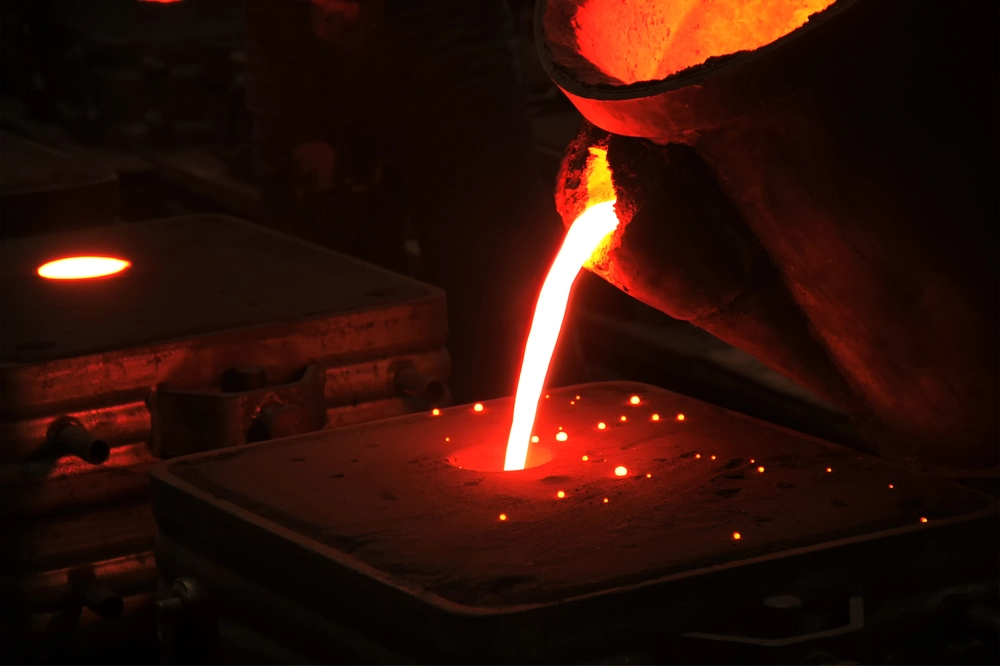
If something works, it’s hard to deny it. That’s why sand casting has been a preferred method of creating molds for metal castings for almost as long as people have been working with molten metal. The sand casting process involves using sand packed together tightly to form a mold around a metal part. When the mold is removed from the part to be cast, it leaves behind an impression or cavity that can be filled with molten metal. This process offers a number of advantages that make it ideal for castings, and although it continues to be refined over the years the basics remain more or less the same.
The majority of metal parts made in foundries around the world today are cast using some form of sand casting, and there are a few variations of the technique that may be employed depending on the circumstances. Choosing the right one for any casting operation will come down to a few deciding factors, which is why it’s important to understand the differences between each of these methods.
Hiler Industries is a leading provider of shell mold casting, an innovative variation of sand casting that offers significant benefits when used to cast parts with tight tolerances and complex geometries. To make the right decision for any casting project, it helps to know all the options. Read on to learn more about the most popular sand casting methods currently in use today, what sets them apart, and what each has to offer.
Sands Used in Traditional Sand Casting Techniques
The key difference in all the various types of sand casting methods comes down to the type of sand used. Depending on the physical properties and consistencies of the sand, the molds created will offer different levels of performance under certain conditions. The most common types of sand used in the casting process include:
Green Sand
Green sand casting uses wet sand with some clay content to create a mold around the metal part. The moisture and clay content of the sand is what helps it keep its shape. One of the key benefits of this process is that because the sand remains uncured during casting, the molds can be removed from the part and broken back down into sand that can be reused multiple times. This makes the process fast and relatively inexpensive compared to other processes. However, a potentially significant drawback to this method is that because it remains wet during casting, there’s a chance that the mold may lose its shape or collapse before the metal is cured.
Resin Sand
This process uses a blend of quartz sand and resin sand to create molds. A resin sand mold is created when the mixture is applied to a metal part and then heated. The heat causes the resin sand to melt, creating bonds between it and the quartz sand that leaves behind a rigid and smooth shell around the part that is used as the mold for further castings. Although the solid mold results in higher accuracy in the finished part, this process typically costs more and takes longer to complete than other methods.
Sodium Silicate
Sodium silicate is a liquid that can be converted almost instantly into a solid after exposure to carbon dioxide. This means that when mixed with sand, sodium silicate can create molds relatively quickly by coating the part and then passing carbon dioxide through the sand. This process is used most often when casting parts that feature internal cavities, because the rapid dehydration of the sodium silicate allows for the sand to keep its shape inside the cavities. The main downside to this process is that foundries must be very careful about the ratios of sand and sodium silicate used. Without the right balance between the two, the sand inside the cavities will not break down. This means it will be trapped inside the part and lead to the casting being wasted.
Shell Mold Casting
The shell mold process uses exceptionally fine sand that is coated with resin. After being applied to metal patterns, the resin-coated sand is heated, fusing the particles together as a thin shell. This shell is then removed from the patterns and used as the mold for casting new parts. The main benefit of this technique is how the fine sand creates extremely accurate molds. Compared to green sand and other methods, shell mold casting is much more capable of capturing fine details and surface finishes. The resulting part requires less finishing as a result, helping to save money and prevent flaws that lead to parts being rejected.
Where Does Each Type of Sand Casting Work Best?
Although all types of sand casting technique provide effective creation of molds for metal casting, there’s no one-size-fits-all process that works as effectively across all applications. The subtle differences in each method mean some types of casting are better suited for one sand casting process over another. With that in mind, here are some examples of applications that may lead a foundry to choose one process over another:
- Green Sand: Because using green sand is generally quick and inexpensive, it tends to be the preferred casting method used for general-purpose jobs. Most parts can be cast using green sand molds, but the process’ use of larger-grain sand means especially detailed or complex parts may not turn out as well.
- Resin Sand: Thanks to the use of resin to help the mold hold its shape more effectively throughout the casting process, this technique is often used for components that require higher accuracy. However, the extra steps involved and higher costs compared to green sand mean resin sand molds are not as cost-effective for large-scale production of simpler parts.
- Sodium Silicate: This process provides a good fit for casting parts that have internal cavities that must be reproduced. The drawback is that it calls for more specialized knowledge to ensure the foundry uses the proper balance between sodium silicate and sand to produce usable castings. For that reason, some foundries may not be comfortable with using it.
- Shell Mold Casting: The combination of fine sand and resins used in this type of sand casting produces molds that are extremely accurate to the piece being duplicated. This means surfaces are smoother, fine details are captured, and tight tolerances can be maintained without the need for much in the way of additional finishing.
Why the Fineness of the Sand Matters
Some forms of sand casting use finer sand than others, which can have an impact on the results. Green sand typically tends to be coarser, which results in molds that are not as tightly packed together. Although this can result in the loss of certain finer details in the finished parts, green sand also allows for more gas permeability, due to the microscopic spaces between the sand particles. Water vapor therefore can escape from the mold more easily, which can impact the overall quality of the casting.
This is another area in which shell mold casting provides advantages, as the use of resin within the sand mixture means the mold retains its shape after being heated. This means permeability is not a concern, as the sand holds together even while dry. Without the presence of moisture within the mold, there is less concern over water vapor affecting the casting process. This is one of the many reasons why foundries choose the shell mold casting technique for casting parts that need to meet extremely rigid specifications.
Where Shell Mold Casting Is the Best Choice
Precise, high-quality castings are critical for numerous industries, which is why so many of them turn to foundries that are experienced in shell mold casting. For example, automotive manufacturers prefer it for casting engine blocks, brake components, and other elements that have to be produced with extreme precision for dependability and performance. The complex shapes and tight tolerances required for gears and valves used in industrial machinery also call for shell mold casting in most cases. Certain types of castings also use highly wear-resistant metal alloys that are not machined easily, which means they need to be cast as closely to the final specifications as possible. Shell mold casting makes this possible.
Hiler Industries Is Your Source for Shell Mold Casting
If your needs call for shell mold casting, there’s no better choice for the job than Hiler Industries. We were one of the first foundries in the nation to adopt the shell mold casting technique, and our decades of experience with this process means we know better than anyone how to apply it for the best possible results for your project.
In addition to our expertise with shell mold casting, we also offer our customers peace of mind thanks to our extensive quality assurance processes. We’re proud to be ISO 9001-certified, ensuring our processes meet internationally recognized standards for quality in casting and machining. We’ve also received recognitions from world-class clients including John Deere and Caterpillar, which we believe speaks to our dedication and capabilities. Our commitment to continuous improvement also means we never stop looking for ways to provide better services for the customers we serve, always refining and enhancing what we do. If you’re ready to learn more about what makes Hiler Industries the best source for superior shell mold casting services, reach out and speak with a member of our team today to get started on your next project.