
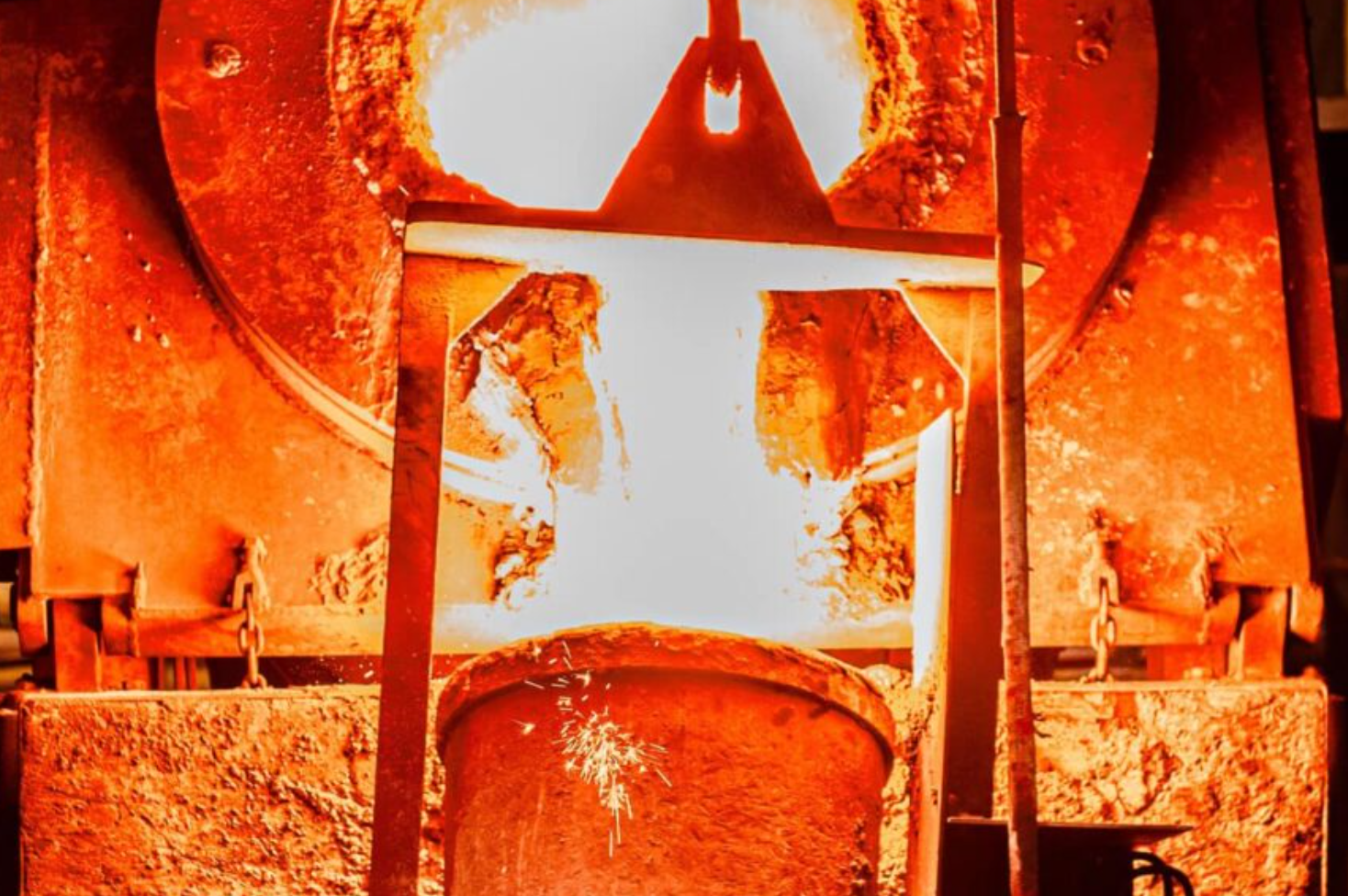
Foundry casting is among the most commonly used manufacturing methods for producing durable metal components. It involves pouring molten metal into a mold cavity that’s shaped like the final piece. Once the metal cools and solidifies, the casting is removed and cleaned, then prepared for use or additional machining.
Cast components are used across industries: automotive, agriculture, construction, energy, and industrial equipment manufacturing. Everything from pump housings and valve bodies to engine parts and machinery bases may begin in a foundry.
In foundry casting 101, the fundamentals provide a solid introduction to modern metal casting techniques and industrial manufacturing processes. Beginners, engineers, hobbyists, and manufacturing professionals can better understand how metal parts are produced and why different casting methods, such as shell mold casting, are used.
Overview of Basic Foundry Processes
Most foundry operations follow a similar workflow, even though the tooling and techniques may vary from one process to another. Every stage affects the quality and consistency, along with performance, of the final casting.
A typical foundry process includes:
- Pattern and mold creation
- Mold preparation
- Melting metal
- Pouring molten metal into molds
- Cooling and solidification
- Shakeout and mold removal
- Cleaning and finishing
- Inspection and quality control
Each step depends on the others. Problems during mold preparation, for example, can create surface defects or dimensional issues later in production. Poor temperature control during pouring may introduce shrinkage defects or porosity. That’s why experienced foundries place heavy emphasis on process control from beginning to end.
Beginners also benefit from learning common foundry terminology early on. A few important terms include:
- Pattern: The model used to create the mold cavity
- Core: A shaped insert used to create internal passages or hollow areas
- Gating system: Channels that guide molten metal into the mold
- Riser: A reservoir that feeds molten metal during solidification
- Flash: Excess material formed along mold seams
- Shakeout: The process of removing the casting from the mold
Different foundry processes use different tooling systems and materials, but the goal remains the same: Produce accurate, reliable metal components with repeatable quality.
In modern manufacturing, foundries also focus heavily on quality assurance. Dimensional inspection and metallurgical testing, along with process monitoring, all help ensure castings meet performance standards. This becomes especially important in industries where components operate under high loads, extreme temperatures, continuous wear, or other challenging conditions.
Step-by-Step Guide to the Casting Process
Pattern Creation and Tooling Preparation
Every casting project starts with a pattern that forms the shape of the final part and creates the mold cavity. Patterns may be made from wood, metal, plastic, or resin, depending on production volume and casting requirements. High-volume industrial production typically uses durable metal tooling for consistency and long-term repeatability.
In shell mold casting, heated metal patterns are used with resin-coated sand to create rigid mold halves. This process produces smoother mold surfaces and more precise dimensions than many traditional molding methods.
Mold Making
Once the pattern is ready, the next step is mold creation. In sand casting, sand is compacted around the pattern to create the mold cavity. With shell molding, sand coated with resin creates a tough shell surrounding the heated pattern. The shell sections are then assembled into a complete mold.
The mold must withstand high temperatures while maintaining dimensional stability during pouring and cooling. Its quality directly affects surface finish and dimensional accuracy, along with defect rates. Beginners sometimes underestimate how important mold preparation is. Weak molds may crack during pouring, and poor venting can trap gases inside the casting.
Core Production
Many cast parts include internal cavities or passageways: Cores are used to create these features. Cores are typically made from specially bonded sand mixtures that can survive the pouring process but still break away after solidification.
Accurate core positioning is needed, since even slight movement can affect wall thickness or internal geometry. Industrial foundries often use automated core-making systems to maintain consistency during high-volume production.
Melting the Metal
Metal melting requires precise temperature control and careful material handling. Different alloys melt at different temperatures and behave differently during pouring and solidification. A few common casting metals include gray iron, ductile iron, steel, aluminum, and bronze.
Industrial foundries use furnaces designed for specific production requirements. Induction furnaces, for example, offer strong temperature control and efficient melting performance.
Pouring the Metal
This step involves pouring the metal into a prepared mold when it finally melts at the right temperature and has the correct composition. The gating system controls how metal flows into the cavity with proper flow, reducing turbulence and trapped gases, along with inclusions.
Pouring too quickly may damage the mold or introduce defects. But pouring too slowly can cause incomplete filling before the metal begins to solidify. Experienced foundry operators pay close attention to pour temperature, flow rate, and mold behavior during this stage. Note that shell mold casting is especially valued for its ability to produce consistent mold cavities that support smoother metal flow and improved surface quality.
Cooling and Solidifying
The metal starts cooling and becomes solid inside the mold. This cooling process affects grain structure, strength, hardness, and dimensional stability. If it happens unevenly, it can lead to several problems, such as shrinkage defects, cracking, and internal stresses.
Foundries may adjust mold materials and riser design or cooling methods to control solidification behavior. This stage requires patience, since removing castings too early can damage the part or create distortion.
Shakeout and Casting Removal
Once the casting has cooled sufficiently, the mold material is removed. In sand-based processes, this stage is commonly called shakeout. Excess sand and cores, along with gating material, are separated from the casting.
Industrial operations often use certain equipment (for example, vibration systems, conveyors, and automated handling equipment) to improve efficiency and reduce manual labor. Keep in mind that the casting at this point is structurally complete, but additional finishing work is usually still required.
Cleaning and Finishing
After removal from the mold, castings go through several finishing operations. These may include:
- Removing gates and risers
- Grinding excess material
- Shot blasting
- Surface cleaning
- Heat treatment
- Machining
The amount of finishing required depends heavily on the casting method used. Processes like shell molding generally produce smoother surfaces and tighter tolerances, potentially reducing downstream machining requirements. That efficiency advantage is one reason shell mold casting is often used for complex iron castings with strict dimensional requirements.
Inspection and Quality Control
The final stage involves inspection and testing. Foundries use dimensional checks, visual inspection, hardness testing, and non-destructive evaluation methods to confirm quality standards. Some castings also undergo metallurgical analysis or pressure testing, depending on their application. Quality control helps modern foundries monitor quality throughout the process to identify issues before they become expensive production problems.
Comparison of Casting Techniques
Each of these casting methods has advantages and limitations, along with ideal applications.
Sand Casting
This is among the oldest and most commonly used casting techniques. The process uses compacted sand molds formed around a pattern that works well for large parts, lower production volumes, complex shapes, and similar applications.
Advantages include lower tooling costs and flexibility for large components, along with compatibility with many alloys. But it does have a few limitations: rougher surface finishes, wider dimensional tolerances, and more finishing work. Sand casting remains a practical option for many industrial applications, especially large castings where tooling cost is a major consideration.
Shell Mold Casting
Shell mold casting uses heated metal patterns and resin-coated sand to create thin, rigid mold shells. Compared to traditional sand casting, shell molding offers:
- Better dimensional accuracy
- Smoother surface finishes
- Improved repeatability
- Reduced machining requirements
- Strong production efficiency
These advantages make shell mold casting useful for iron castings requiring consistent quality and tighter tolerances. The process is often used for automotive parts, pump housings, valve bodies, agricultural equipment, and industrial machinery components. While tooling costs are typically higher than basic sand casting, the improved precision and production consistency tend to justify the investment for medium- to high-volume production.
Die Casting
This technique involves placing molten metal in steel molds in high-pressure conditions. It’s often used with non-ferrous types of metals (for example, aluminum and zinc). In fact, die casting works well for high-volume production of smaller precision components.
Advantages include high production speed and excellent dimensional consistency, along with smooth surface finishes. But there are limitations, including higher cooling costs, limited suitable for ferrous metals, and less flexibility for very large parts.
Investment Casting
Investment casting, or lost-wax casting, uses wax patterns coated with ceramic material. The wax is taken out before pouring molten metal into the cavity after the ceramic shell becomes hard enough.
Its advantages include excellent detail reproduction and tight tolerances, along with complex geometries. But potential drawbacks include longer production times, higher processing costs, and more intricate tooling requirements. Investment casting is often used for aerospace and medical applications, along with high-precision industrial applications.
Which Method Is Best for Beginners?
For hobbyists and beginners, sand casting is usually the easiest process to learn, since the tooling and equipment are relatively accessible.
For industrial production environments, shell mold casting often provides a strong balance between quality, efficiency, and repeatability. It bridges the gap between basic sand casting flexibility and the precision advantages of more advanced casting methods.
Materials Used in Foundry Casting
Material selection plays a major role in casting quality, durability, machinability, and overall performance. Each material behaves differently during melting, pouring, cooling, and finishing.
Gray Iron
This type of iron tends to be used due to its qualities of outstanding machinability, vibration damping, and wear resistance. It’s commonly found in:
- Engine blocks
- Pump housings
- Machine bases
- Brake components
Gray iron also works well with shell mold casting processes since it fills molds effectively and produces stable cast structures.
Ductile Iron
Ductile iron offers greater strength and toughness than gray iron. Its graphite structure improves impact resistance and ductility, making it useful for:
- Heavy equipment parts
- Pipe fittings
- Structural components
- Automotive applications
Ductile iron remains popular in industries requiring both durability and cost efficiency.
Steel Castings
Steel castings provide high strength and heat resistance. They’re often used in demanding industrial applications where components experience high stress or elevated temperatures. But steel casting can be more challenging due to its higher pouring temperatures and shrinkage characteristics.
Aluminum Alloys
Aluminum castings are valued for their lightweight properties and corrosion resistance. Common applications include:
- Automotive components
- Aerospace parts
- Consumer products
- Electronics housings
Aluminum also supports high production rates in die casting operations.
Bronze and Brass
Bronze and brass are often used for decorative and marine applications, along with corrosion-resistant applications. These alloys offer good machinability and attractive surface finishes while maintaining strong wear resistance.
How Material Selection Affects the Process
Different materials have different requirements: handling techniques, mold designs, and cooling strategies. Factors influencing material selection include:
- Strength requirements
- Corrosion resistance
- Heat tolerance
- Machinability
- Weight
- Cost
- Surface finish expectations
Beginners sometimes focus only on the metal itself, but compatibility between the alloy and the casting method is equally important. For example, shell mold casting works well with many iron casting applications since the process supports both dimensional consistency and clean surface quality.
Safe Handling of Casting Materials
Foundry materials must always be handled carefully. Important safety practices include:
- Wearing heat-resistant protective equipment
- Using proper ventilation
- Storing materials correctly
- Avoiding moisture contamination
- Following furnace safety procedures
Building a Strong Foundation in Foundry Casting
Foundry casting combines engineering, metallurgy, tooling, and manufacturing into a process that remains essential across several industries. From simple sand molds to highly controlled shell mold systems, casting allows manufacturers to produce durable metal components efficiently and at scale.
Understanding the fundamentals helps beginners learn the workflow, terminology, safety practices, and material considerations involved in foundry operations. It also helps manufacturers choose the right casting process based on quality requirements and production goals, along with application demands.
For companies seeking precision iron castings and dependable production capabilities, Hiler Industries provides extensive experience in shell mold casting, along with a wide range of cast iron materials for industrial applications. Our expertise in shell molding, process control, and iron casting production supports manufacturers across multiple industries that require consistent quality and reliable performance.