
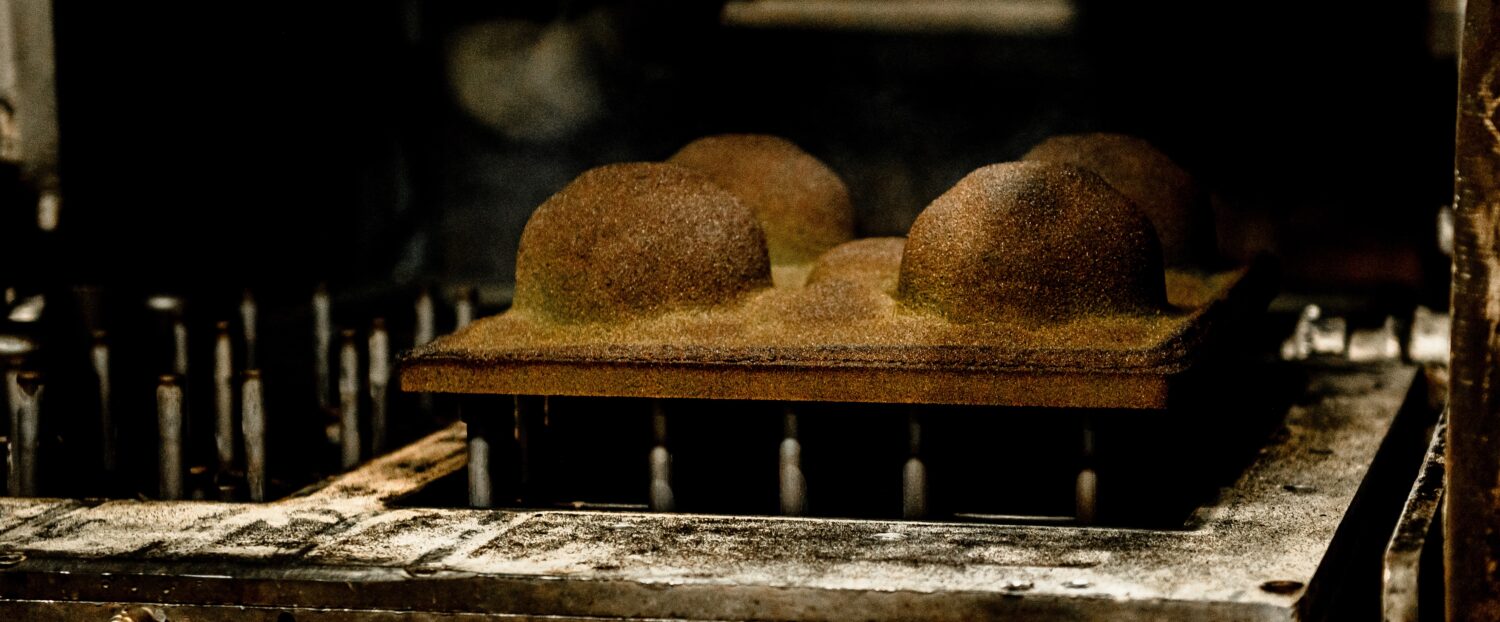
Manufacturers need a way to turn molten metal into parts that are both intricate and practically flawless. And that’s where shell mold casting applications come into play.
This method uses thin, resin-coated sand shells to form rigid molds. When molten metal is poured in, it fills every cavity, producing complex parts with tight tolerances and smooth surfaces that are ready to use with minimal finishing.
What sets shell mold casting apart is its balance of precision and efficiency. Unlike traditional sand casting, the hardened shell keeps its shape even under intense heat, resulting in fewer defects and consistent dimensions.
Over the decades, improvements in resin formulas and automation have made this process a reliable workhorse for high-precision manufacturing. From gear components to hand tools, shell mold applications have evolved to meet the demands of engineers and designers who can’t afford compromises on quality or performance.
Benefits of Shell Mold Casting
The real value of shell mold casting lies in the benefits it delivers, both in terms of quality and cost savings. Manufacturers prefer the shell mold process as it keeps parts consistent, reduces waste, and provides predictability, all without compromising the finish.
Key advantages include:
- Superior dimensional accuracy, reducing the need for post-casting machining
- Smooth, near-finished surfaces that cut down on labor and materials
- Less scrap and waste, making the overall cost more economical
- Better repeatability for medium- to high-volume production runs
Compared to sand casting, shell molding gives you parts that are closer to final specifications right out of the mold. The near net shape allows for gained efficiencies in finishing, scrap reduction, and faster turnarounds.
Shell Mold Casting Automotive Industries
Automotive manufacturing uses this process for engine components, transmission housings, suspension parts, and similar items. Tight tolerances improve fit during assembly, helping to reduce vibration and improve performance, while extending the life of the vehicle.
Manufacturers prefer shell molding over other casting methods because it balances complexity and strength with cost-effectiveness. Engineers get the intricate shapes they need without sacrificing consistency or reliability.
Shell Mold Casting in Agriculture and Tool Industries
Agriculture and hand tool manufacturing might seem worlds apart from automotive. But they benefit from shell mold casting in similar ways.
In agriculture, gearbox housings, hydraulic parts, heavy-duty brackets, and other components need to withstand tough environments. Shell molding delivers durability and consistent quality across every batch.
For hand tools, the process allows for precise heads, housings, and mechanical components with clean surfaces and minimal finishing. That means better ergonomics and longer-lasting tools.
Why it works so well in these industries:
- Consistent, high-strength parts for heavy-use agricultural equipment
- Smooth, precise surfaces for mechanical tools
- Reduced post-casting grinding and machining
- Lower defect rates across large production batches
- Faster turnaround without sacrificing quality
Cutting down on defects and machining time allows shell mold casting to make production more predictable and help manufacturers deliver parts that last in real-world conditions.
Looking Ahead: Why Shell Mold Casting Still Matters
No matter the industry — whether automotive, agriculture, or tools — shell mold casting applications remain a go-to solution for precision and reliability. Its combination of speed, accuracy, and surface quality keeps it competitive over other casting methods, even as technology evolves.
With automation, digital simulations, greener resin options, and other advancements coming into play, the process keeps getting more efficient and sustainable. Engineers and manufacturers can expect even faster cycles and tighter tolerances, along with less waste in the years to come.
Shell mold casting is a proven method that adapts as design complexity grows, helping industries build parts that perform and meet the high standards modern manufacturing demands.