
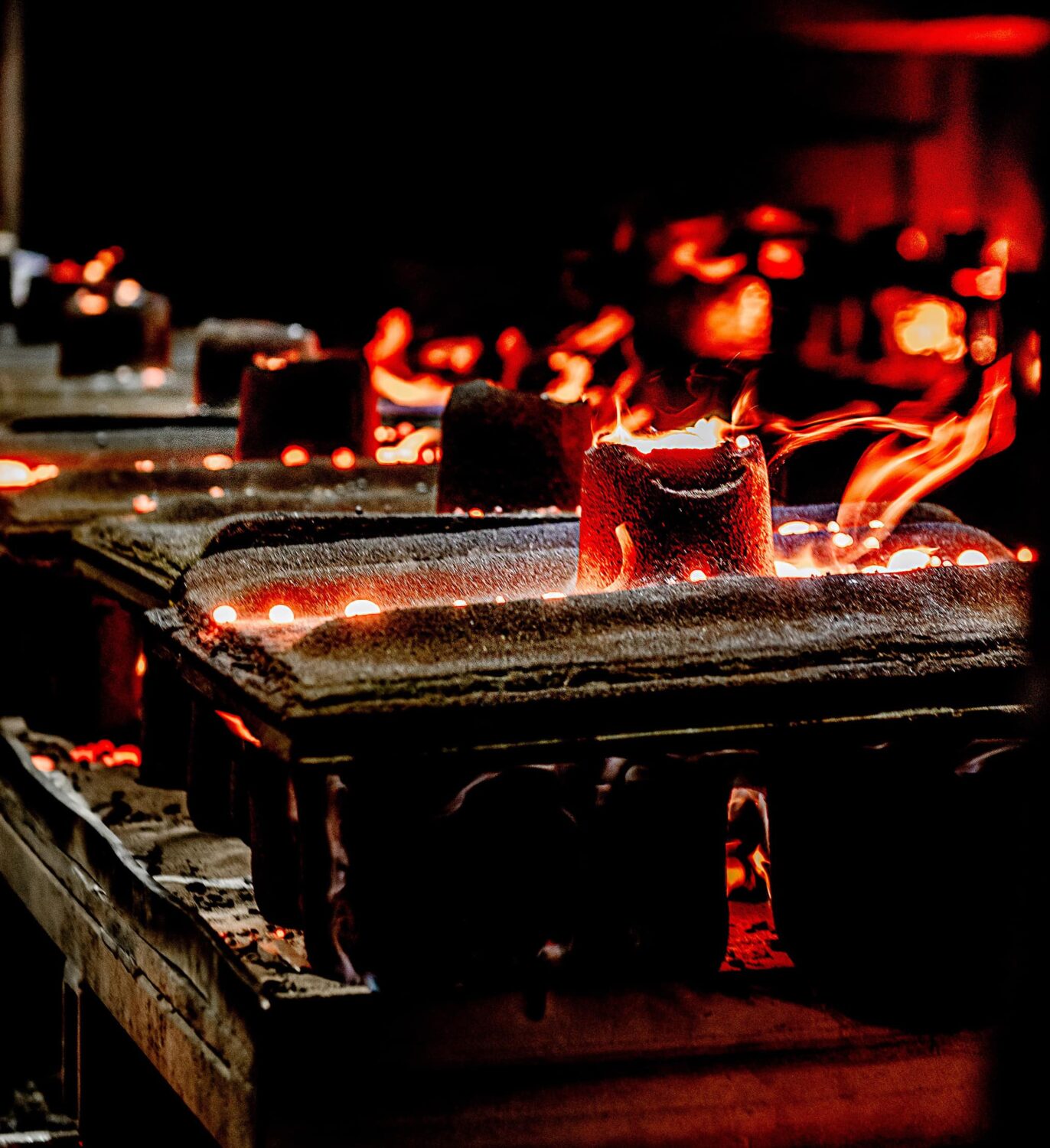
Iron alloys sit at the heart of modern engineering, supporting everything from automotive systems to heavy industrial machinery. What makes them so valuable is their strength and the way they can be engineered and optimized for very specific performance needs.
Iron alloys are combinations of iron with other elements – most commonly carbon, but also silicon, manganese, chromium, nickel, and molybdenum. These additions change how the metal behaves, allowing engineers to fine-tune performance for different environments and loads.
Rather than being a single material, iron alloys are a family of engineered solutions. Depending on the composition and processing method, they can become brittle and hard or tough and ductile, possibly even resistant to corrosion and extreme wear. Some key reasons iron alloys are so widely used include:
- Strong mechanical performance at relatively low cost
- Excellent adaptability through alloying and heat treatment
- Wide availability of base iron and recycling efficiency
- Compatibility with multiple manufacturing methods, like casting and forging
In many industrial environments, engineers rely heavily on ferrous ductile iron casting for a balance of strength and flexibility in complex components. This is especially important in applications where failure is not an option, and performance must remain consistent over long service cycles.
In the broader context of engineering materials, iron alloys remain one of the most studied and refined categories due to their predictable behavior and versatility. But their importance is not just historical. While cast iron once enabled large-scale infrastructure and early industrialization, today’s advanced alloys support precision manufacturing, electric mobility systems, energy infrastructure, and automation technologies.
As manufacturing demands continue to increase, iron alloys are also being engineered with tighter composition controls and improved casting precision, allowing for more consistent performance across large production runs. This evolution has made them even more relevant in modern industrial design.
Classification of Iron Alloys: Ferrous vs. Non-Ferrous
All alloys are generally classified according to whether iron is the primary constituent. This distinction helps engineers understand the material's fundamental characteristics and determine its suitability for particular applications.
Ferrous alloys contain iron as their principal element — materials known for strength and durability, along with a relatively low cost compared to many alternative metals. Most structural and industrial metal components are produced from ferrous alloys, since they offer an excellent combination of mechanical performance and manufacturing versatility.
Ferrous Alloys and Core Characteristics
Ferrous alloys have iron as the main base element, giving them strong mechanical properties, especially in terms of tensile strength and hardness combined with wear resistance. They’re widely used in applications where components must carry load and resist deformation, while maintaining performance under continuous stress. Ferrous alloys also respond effectively to heat treatment, allowing engineers to adjust properties, such as hardness and toughness, depending on the application.
Another key advantage is their compatibility with large-scale manufacturing methods, including casting and forging. This makes them suitable for high-volume industrial production where repeatability and cost efficiency are important considerations.
Common Ferrous Iron Alloys and Their Characteristics
Ferrous alloys include several widely used material groups, each engineered for specific performance outcomes:
- Carbon steels: Provide general-purpose strength and versatility across structural and mechanical uses
- Alloy steels: Enhanced with elements to improve toughness and wear resistance, such as chromium, nickel, molybdenum
- Gray iron: Valued for machinability and vibration damping in heavy machinery components
- White iron: Delivers high hardness and strong abrasion resistance in demanding wear environments
- Ductile iron: Improves impact resistance and fatigue strength through a nodular graphite structure
- Malleable iron: Gains ductility through controlled heat treatment after casting
- Stainless steels: Designed to maintain corrosion resistance while retaining structural strength
These materials represent the most widely used types of iron alloys in industrial engineering, with each selected based on a balance of strength and machinability, along with environmental resistance.
Non-Ferrous Alloys and Their Role in Engineering
Non-ferrous alloys are materials that contain little or no iron, relying instead on metals such as aluminum, copper, titanium, and nickel. They’re used when specific performance characteristics are required that differ from traditional ferrous behavior.
One of their defining advantages is reduced weight, making them suitable for applications where mass reduction is needed. They also tend to offer improved corrosion resistance in certain environments, along with electrical or thermal conductivity depending on the base metal. Due to their properties, non-ferrous alloys are often used in specialized engineering applications where performance requirements are more focused than general structural strength.
Property Differences Between Ferrous and Non-Ferrous Alloys
Ferrous alloys are typically associated with higher strength and greater hardness potential, along with strong wear resistance. They’re also highly responsive to heat treatment, allowing engineers to refine mechanical properties after production.
Non-ferrous alloys are generally selected for their lighter weight and corrosion resistance or functional properties such as conductivity. While they may not match ferrous alloys in load-bearing strength, they provide advantages in environments where weight or chemical exposure is a limiting factor.
Both groups play essential roles in engineering, but ferrous alloys remain the dominant choice for heavy-duty structural and industrial applications due to their cost efficiency and mechanical reliability.
Cast Iron: Types, Properties, and Applications
Cast iron represents one of the most important categories among the various types of iron alloys. Adjusting composition and processing methods allows manufacturers to create cast irons with different mechanical characteristics while maintaining excellent castability. The family of cast irons includes several distinct grades, with each designed to address specific engineering challenges.
Gray Iron
Gray iron is one of the most commonly used cast iron materials. Its microstructure contains graphite flakes that contribute to excellent vibration damping and machinability. Gray iron is frequently used in machine bases, pump housings, engine blocks, and industrial equipment where dimensional stability and vibration control are important. It’s also relatively economical to produce, making it a popular choice for large-scale manufacturing.
Gray iron also performs well in applications where thermal stability is needed, especially in components that experience repeated heating and cooling cycles. Its graphite structure helps dissipate heat efficiently, reducing localized stress buildup during operation.
White Iron
White iron contains carbon primarily in the form of iron carbides rather than graphite. This structure creates a hard, wear-resistant material capable of performing well in abrasive environments. Industries that handle certain materials — minerals, aggregates, and abrasive materials — often rely on white iron for wear plates and grinding equipment or specialized industrial components. The tradeoff is reduced ductility that limits its use in applications requiring impact resistance.
White iron is also valued in applications where localized surface hardness is more important than overall ductility. In many wear-heavy systems, components are designed so that only the outer layer carries the abrasive load, allowing the material to extend service life in demanding industrial environments without frequent replacement.
Ductile Iron
Ductile iron has become one of the most valuable cast materials in modern manufacturing. Unlike gray iron, the graphite exists in spherical nodules rather than flakes. This seemingly small structural difference improves toughness and ductility, along with fatigue resistance. Ductile iron is commonly used for gears, suspension components, valve bodies, agricultural equipment, heavy machinery, and infrastructure products. It offers many of the strength advantages associated with steel while maintaining the manufacturing efficiencies of cast iron.
Many manufacturers choose ductile iron since it provides an attractive combination of mechanical performance and cost control, along with design flexibility. Complex geometries can often be produced efficiently through advanced casting processes, reducing machining requirements and material waste. In high-volume production environments, ductile iron components are also favored since they maintain consistent properties across batches when process controls are tightly managed. This consistency is needed in automotive and infrastructure applications where long service life is expected.
Malleable Iron
Malleable iron is produced through heat treatment of certain white iron castings. The process alters the internal structure and improves ductility and toughness, along with machinability. This material is frequently selected for brackets, fittings, hand tools, and hardware components that must tolerate moderate shock loading and repeated service conditions. Malleable iron remains a practical option when both durability and workability are important.
Mechanical and Chemical Properties of Cast Iron
The properties of cast iron vary considerably depending on grade and composition. Engineers often evaluate several key performance factors when selecting a material, including:
- Tensile strength
- Hardness
- Impact resistance
- Wear resistance
- Thermal conductivity
- Machinability
Chemical composition also plays a major role. Carbon and silicon content influence graphite formation, while alloying additions (e.g., nickel, chromium, molybdenum) can further enhance performance characteristics. Manufacturers frequently work with multiple materials to optimize product performance. Choosing the right ones involves balancing design requirements, operating conditions, manufacturing methods, and cost considerations.
Heat Treatment and Metalworking Processes for Iron Alloys
The performance of iron alloys depends on their composition and on how they’re processed. Heat treatment and metalworking operations allow manufacturers to refine microstructures for targeted mechanical properties.
Heat Treatment Methods
Heat treatment is commonly used to modify hardness, strength, toughness, and machinability.
- Annealing: This involves heating and slowly cooling the material to reduce internal stresses and improve ductility. It’s often used when enhanced machinability or formability is required.
- Quenching: Quenching is rapid cooling from elevated temperatures. This technique can significantly increase hardness and strength, altering the alloy's internal structure.
- Tempering: Typically performed after quenching to reduce brittleness while retaining much of the increased strength, tempering creates a more balanced mix of toughness and hardness.
Together, these processes allow engineers to tailor material performance to specific service conditions.
Key Metalworking Processes
Iron alloys can be shaped and manufactured through several production methods. The most common include:
- Casting for producing complex geometries with efficient material utilization
- Forging for creating components with enhanced grain structure and strength
- Machining for achieving precise dimensions and tight tolerances
- Heat treatment for optimizing mechanical properties
- Welding and fabrication for assembling finished structures and equipment
Casting remains especially valuable when intricate shapes or high production volumes are required. Among casting methods, shell molding offers advantages in dimensional consistency and repeatability, along with surface quality, making it well-suited for many industrial iron alloy applications.
Welding and Safety Considerations
Welding iron alloys requires an understanding of both material composition and heat input control. Different alloy grades respond differently to welding processes, and improper procedures can lead to cracking and distortion or undesirable microstructural changes. Preheating is often used with certain cast irons to reduce thermal stress, while controlled cooling can further minimize the risk of cracking. Selecting compatible filler materials and following established welding procedures are also needed for producing reliable joints.
Safety remains a key consideration during all metalworking operations. Proper personal protective equipment, ventilation systems, machine guarding, and operator training help reduce workplace risks. Modern welding equipment and process controls have improved both productivity and consistency, allowing manufacturers to get higher-quality results while maintaining safe working environments.
Why Iron Alloys Continue to Drive Modern Manufacturing
The various types of iron alloys available today offer an impressive range of options for solving complex design challenges. From gray iron and white iron to ductile and malleable grades, each alloy offers a unique combination of strength, durability, machinability, wear resistance, and cost efficiency.
These materials continue to shape modern engineering, providing reliable performance across industries ranging from transportation and agriculture to energy production and industrial manufacturing. Advances in metallurgy and casting technology, along with heat treatment, have further expanded the capabilities of iron alloys, allowing manufacturers to meet increasingly demanding requirements.
Selecting the right alloy is only part of the process. Equally important is partnering with a manufacturer that understands material behavior, casting design, process control, and quality requirements. Hiler Industries offers extensive experience working with a broad range of iron alloy grades and casting solutions, helping customers match material selection with production goals and performance expectations.
Whether a project requires ductile iron, gray iron, specialized alloy grades, or precision manufacturing expertise, the right combination of material knowledge and process capability can make a difference. To learn more about advanced manufacturing capabilities, including how shell mold casting can support your next project, reach out to Hiler Industries to discuss your requirements with our team.